10 Steps to the IEP
The whole path, from the first referral to re-evaluation.
Infographic by Eugene Choi, Education & Development Intern
Some pages of this design had not loaded yet, so they are left out. To print every page, use “Print it” on the page.
Read it in larger textThe same words as the design, easier to read on a phone and read aloud by screen readers
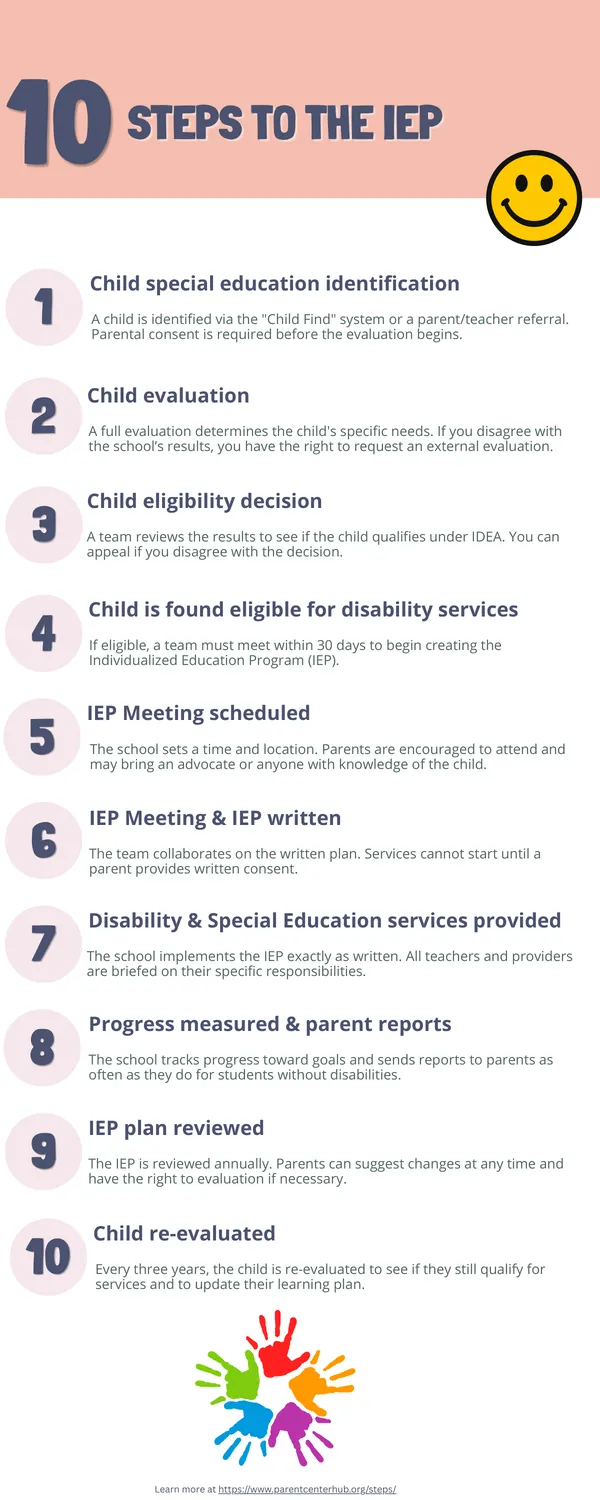
Text version of 10 Steps to the IEP
Child special education identification
A child is identified via the “Child Find” system or a parent/teacher referral. Parental consent is required before the evaluation begins.
Child evaluation
A full evaluation determines the child’s specific needs. If you disagree with the school’s results, you have the right to request an external evaluation.
Child eligibility decision
A team reviews the results to see if the child qualifies under IDEA. You can appeal if you disagree with the decision.
Child is found eligible for disability services
If eligible, a team must meet within 30 days to begin creating the Individualized Education Program (IEP).
IEP Meeting scheduled
The school sets a time and location. Parents are encouraged to attend and may bring an advocate or anyone with knowledge of the child.
IEP Meeting & IEP written
The team collaborates on the written plan. Services cannot start until a parent provides written consent.
Disability & Special Education services provided
The school implements the IEP exactly as written. All teachers and providers are briefed on their specific responsibilities.
Progress measured & parent reports
The school tracks progress toward goals and sends reports to parents as often as they do for students without disabilities.
IEP plan reviewed
The IEP is reviewed annually. Parents can suggest changes at any time and have the right to evaluation if necessary.
Child re-evaluated
Every three years, the child is re-evaluated to see if they still qualify for services and to update their learning plan.
Learn more at parentcenterhub.org/steps (opens a new tab)
From The Parents’ Place of Maryland
Fact sheets that go with this tool, from Maryland’s free parent center.
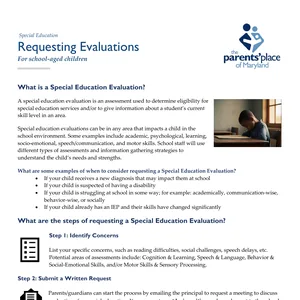
- Requesting Evaluations: For school-aged children (opens a new tab)Steps 1 and 2, in more depth. How to ask the school for an evaluation in writing, what to include, and what happens next in Maryland.
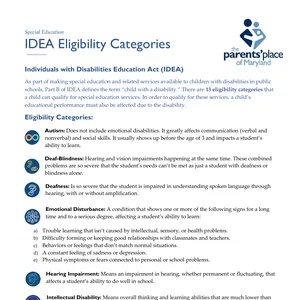
- IDEA Eligibility Categories (opens a new tab)Step 3, in more depth. The 13 disability categories in federal law, and what it takes for a child to qualify.
Free help in Maryland. A Family Partner at The Parents’ Place can help you prepare for a meeting and understand your rights, in English or Spanish.
Contact a Family Partner (opens a new tab)or call 410-768-9100
In DC or Virginia? Find your parent center.
10 Steps to the IEP. Infographic by Eugene Choi, Education & Development Intern. Guiding Hands, a free toolkit from The ABLE Foundation · ABLEtheFoundation.org/guiding-hands/ten-steps · General information, not legal advice. Reviewed October 2026.
Empowered by information. This toolkit serves as an informative resource but does not take the place of legal advice, your child’s school team, federally appointed parent support centers, or advocates/lawyers. Each state (i.e., Maryland, DC, Virginia) has their own rules. Please be sure to consult your local representatives and organizations for more information. Read the full notice