A Caregiver’s Conversation Guide
What to say so you understand the plan before you agree.
Guide by Linda Fokam, Education & Development Intern
Some pages of this design had not loaded yet, so they are left out. To print every page, use “Print it” on the page.
Read it in larger textThe same words as the design, easier to read on a phone and read aloud by screen readers
Text version of A Caregiver’s Conversation Guide
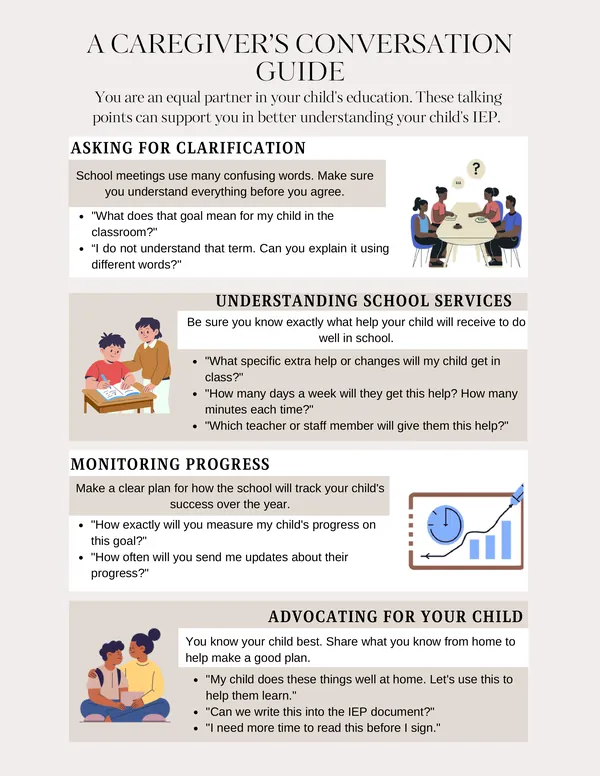
You are an equal partner in your child’s education. These talking points can support you in better understanding your child’s IEP.
Asking for clarification
School meetings use many confusing words. Make sure you understand everything before you agree.
- “What does that goal mean for my child in the classroom?”
- “I do not understand that term. Can you explain it using different words?”
Understanding school services
Be sure you know exactly what help your child will receive to do well in school.
- “What specific extra help or changes will my child get in class?”
- “How many days a week will they get this help? How many minutes each time?”
- “Which teacher or staff member will give them this help?”
Monitoring progress
Make a clear plan for how the school will track your child’s success over the year.
- “How exactly will you measure my child’s progress on this goal?”
- “How often will you send me updates about their progress?”
Advocating for your child
You know your child best. Share what you know from home to help make a good plan.
- “My child does these things well at home. Let’s use this to help them learn.”
- “Can we write this into the IEP document?”
- “I need more time to read this before I sign.”
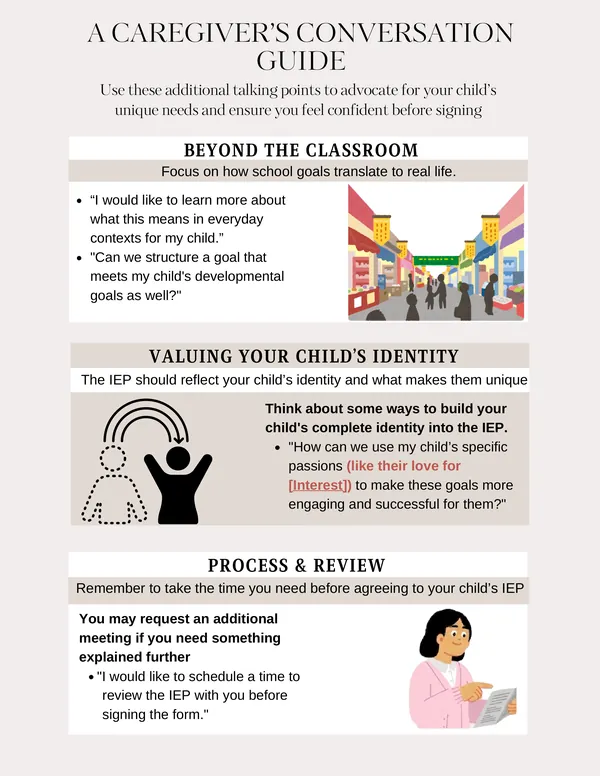
Use these additional talking points to advocate for your child’s unique needs and ensure you feel confident before signing.
Beyond the classroom
Focus on how school goals translate to real life.
- “I would like to learn more about what this means in everyday contexts for my child.”
- “Can we structure a goal that meets my child’s developmental goals as well?”
Valuing your child’s identity
The IEP should reflect your child’s identity and what makes them unique.
Think about some ways to build your child’s complete identity into the IEP.
- “How can we use my child’s specific passions (like their love for [Interest]) to make these goals more engaging and successful for them?”
Process & review
Remember to take the time you need before agreeing to your child’s IEP.
You may request an additional meeting if you need something explained further.
- “I would like to schedule a time to review the IEP with you before signing the form.”
From The Parents’ Place of Maryland
Fact sheets that go with this tool, from Maryland’s free parent center.
- Questions Families Should Ask in an IEP Meeting (opens a new tab)More questions to ask, and a worksheet for the answers. Who will teach your child, how much help they will get and how progress is tracked, with space to write the school’s answers.
Free help in Maryland. A Family Partner at The Parents’ Place can help you prepare for a meeting and understand your rights, in English or Spanish.
Contact a Family Partner (opens a new tab)or call 410-768-9100
In DC or Virginia? Find your parent center.
A Caregiver’s Conversation Guide. Guide by Linda Fokam, Education & Development Intern. Guiding Hands, a free toolkit from The ABLE Foundation · ABLEtheFoundation.org/guiding-hands/conversation-guide · General information, not legal advice. Reviewed October 2026.
Empowered by information. This toolkit serves as an informative resource but does not take the place of legal advice, your child’s school team, federally appointed parent support centers, or advocates/lawyers. Each state (i.e., Maryland, DC, Virginia) has their own rules. Please be sure to consult your local representatives and organizations for more information. Read the full notice