Building a Foundation: Understanding the IEP Process
Free guides, videos and help in one list. Recursos en español.
Resource list by Melody Mann, Education & Development Fellow
Most items in the picture are links: tap or click one to open it. Ver los recursos en español
Some pages of this design had not loaded yet, so they are left out. To print every page, use “Print it” on the page.
Most items in the picture are links: tap or click one to open it. Ver los recursos en español
Read it in larger textThe same words as the design, easier to read on a phone and read aloud by screen readers
Text version of Building a Foundation: Understanding the IEP Process
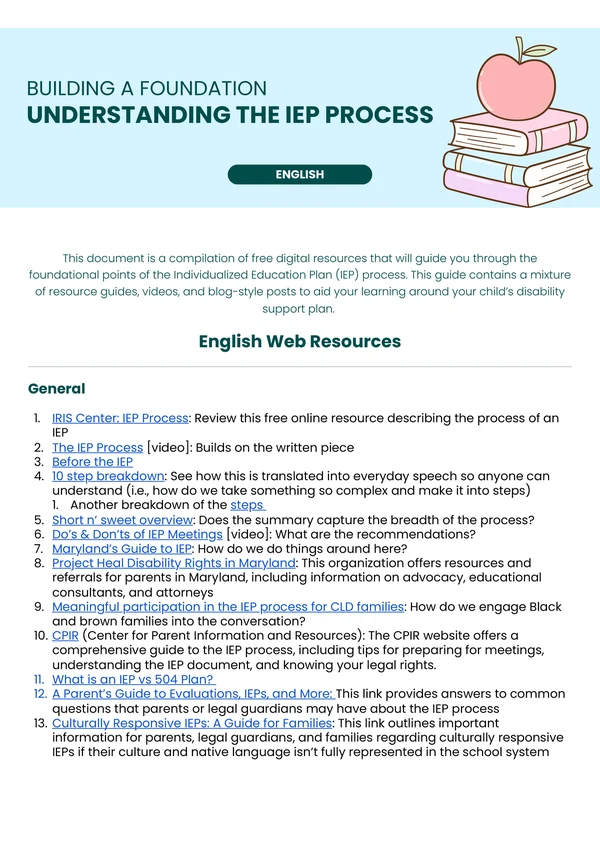
This document is a compilation of free digital resources that will guide you through the foundational points of the Individualized Education Plan (IEP) process. This guide contains a mixture of resource guides, videos, and blog-style posts to aid your learning around your child’s disability support plan.
General
- IRIS Center: IEP Process (opens a new tab)
Review this free online resource describing the process of an IEP.
- The IEP Process [video] (opens a new tab)
Builds on the written piece.
- Before the IEP (opens a new tab)
- 10 step breakdown (opens a new tab)
See how this is translated into everyday speech so anyone can understand (i.e., how do we take something so complex and make it into steps).
- Short n’ sweet overview (opens a new tab)
Does the summary capture the breadth of the process?
- Do’s & Don’ts of IEP Meetings [video] (opens a new tab)
What are the recommendations?
- Maryland’s Guide to IEP (opens a new tab)
How do we do things around here?
- Project Heal Disability Rights in Maryland (opens a new tab)
This organization offers resources and referrals for parents in Maryland, including information on advocacy, educational consultants, and attorneys.
- Meaningful participation in the IEP process for CLD families (opens a new tab)
How do we engage Black and brown families into the conversation?
- CPIR (Center for Parent Information and Resources) (opens a new tab)
The CPIR website offers a comprehensive guide to the IEP process, including tips for preparing for meetings, understanding the IEP document, and knowing your legal rights.
- What is an IEP vs 504 Plan? (opens a new tab)
- A Parent’s Guide to Evaluations, IEPs, and More (opens a new tab)
This link provides answers to common questions that parents or legal guardians may have about the IEP process.
- Culturally Responsive IEPs: A Guide for Families (opens a new tab)
This link outlines important information for parents, legal guardians, and families regarding culturally responsive IEPs if their culture and native language isn’t fully represented in the school system.
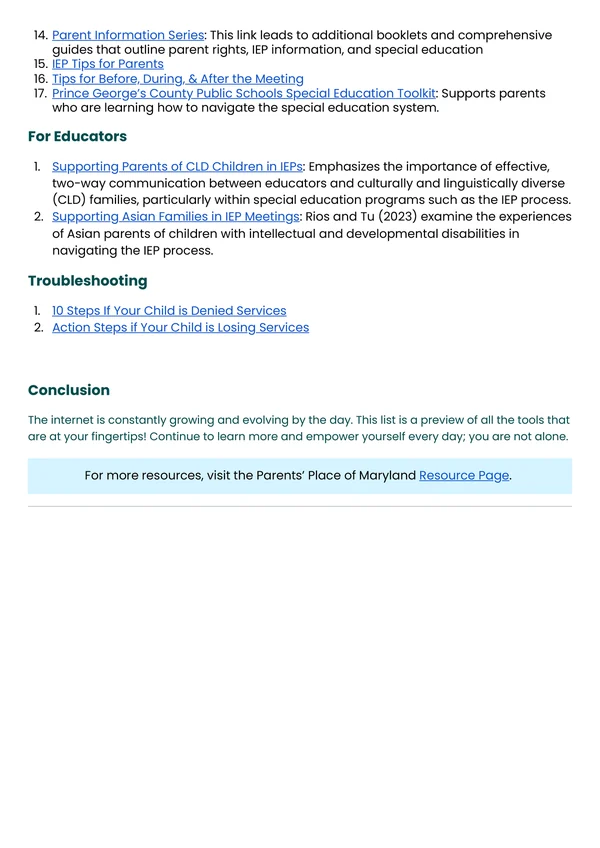
- Parent Information Series (opens a new tab)
This link leads to additional booklets and comprehensive guides that outline parent rights, IEP information, and special education.
- IEP Tips for Parents (opens a new tab)
- Tips for Before, During, & After the Meeting (opens a new tab)
- Prince George’s County Public Schools Special Education Toolkit (opens a new tab)
Supports parents who are learning how to navigate the special education system.
For educators
- Supporting Parents of CLD Children in IEPs (opens a new tab)
Emphasizes the importance of effective, two-way communication between educators and culturally and linguistically diverse (CLD) families, particularly within special education programs such as the IEP process.
- Supporting Asian Families in IEP Meetings (opens a new tab)
Rios and Tu (2023) examine the experiences of Asian parents of children with intellectual and developmental disabilities in navigating the IEP process.
Troubleshooting
Conclusion
The internet is constantly growing and evolving by the day. This list is a preview of all the tools that are at your fingertips! Continue to learn more and empower yourself every day; you are not alone.
For more resources, visit The Parents’ Place of Maryland resource page. (opens a new tab)
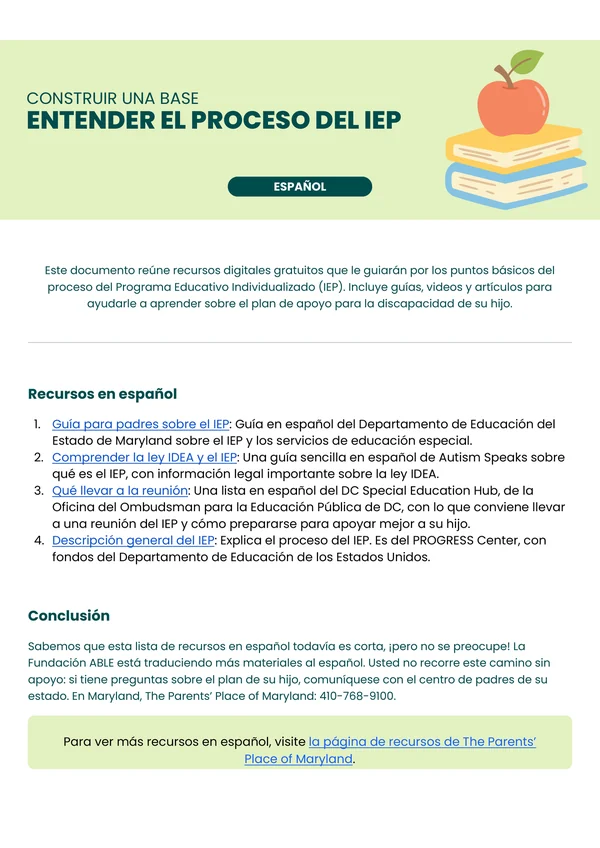
Recursos en español
- Guía para padres sobre el IEP (se abre en una pestaña nueva)
Guía en español del Departamento de Educación del Estado de Maryland sobre el IEP y los servicios de educación especial.
- Comprender la ley IDEA y el IEP (se abre en una pestaña nueva)
Una guía sencilla en español de Autism Speaks sobre qué es el IEP, con información legal importante sobre la ley IDEA.
- Qué llevar a la reunión (se abre en una pestaña nueva)
Una lista en español del DC Special Education Hub, de la Oficina del Ombudsman para la Educación Pública de DC, con lo que conviene llevar a una reunión del IEP y cómo prepararse para apoyar mejor a su hijo.
- Descripción general del IEP (se abre en una pestaña nueva)
Explica el proceso del IEP. Es del PROGRESS Center, con fondos del Departamento de Educación de los Estados Unidos.
Conclusión
Sabemos que esta lista de recursos en español todavía es corta, ¡pero no se preocupe! La Fundación ABLE está traduciendo más materiales al español. Usted no recorre este camino sin apoyo: si tiene preguntas sobre el plan de su hijo, comuníquese con el centro de padres de su estado. En Maryland, The Parents’ Place of Maryland: 410-768-9100.
Building a Foundation: Understanding the IEP Process. Resource list by Melody Mann, Education & Development Fellow. Guiding Hands, a free toolkit from The ABLE Foundation · ABLEtheFoundation.org/guiding-hands/resource-list · General information, not legal advice. Reviewed October 2026.
Fact sheets from The Parents’ Place of Maryland
Maryland’s Parent Training and Information Center, named by the U.S. Department of Education, shared these eleven fact sheets for Guiding Hands. Each opens on ppmd.org, and most are in Spanish too.
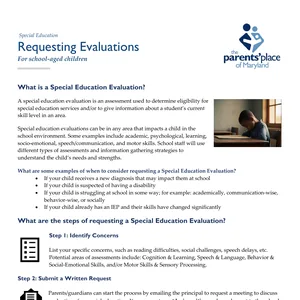
- Requesting Evaluations: For school-aged children (opens a new tab)
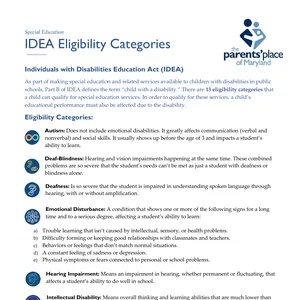
- IDEA Eligibility Categories (opens a new tab)
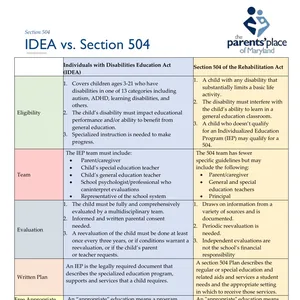
- IDEA vs. Section 504 (opens a new tab)
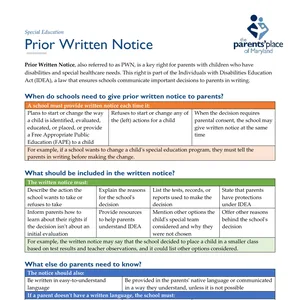
- Prior Written Notice (opens a new tab)
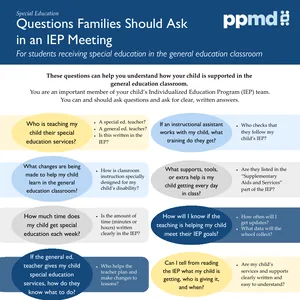
- Questions Families Should Ask in an IEP Meeting (opens a new tab)
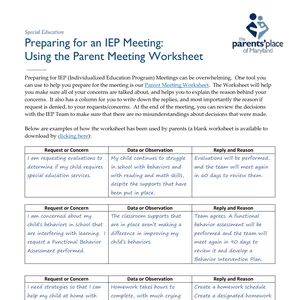
- Preparing for an IEP Meeting: Parent Meeting Worksheet (opens a new tab)
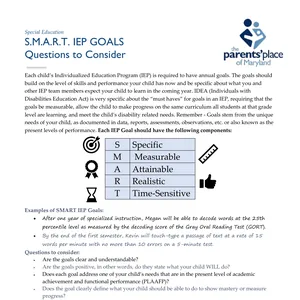
- S.M.A.R.T. IEP Goals: Questions to Consider (opens a new tab)
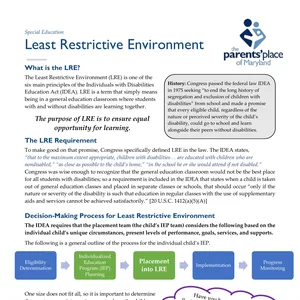
- Least Restrictive Environment (opens a new tab)
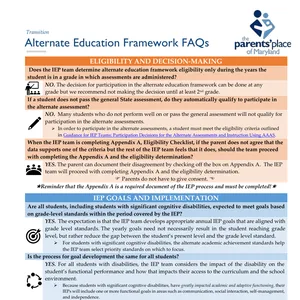
- Alternate Education Framework (opens a new tab)
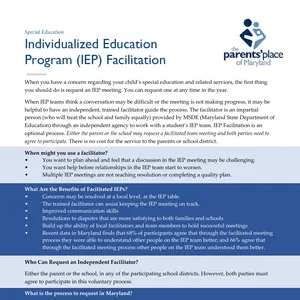
- IEP Facilitation (opens a new tab)
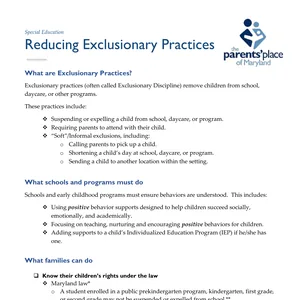
- Reducing Exclusionary Practices (opens a new tab)
Free help in Maryland. A Family Partner at The Parents’ Place can help you prepare for a meeting and understand your rights, in English or Spanish.
Contact a Family Partner (opens a new tab)or call 410-768-9100
In DC or Virginia? Find your parent center.
Empowered by information. This toolkit serves as an informative resource but does not take the place of legal advice, your child’s school team, federally appointed parent support centers, or advocates/lawyers. Each state (i.e., Maryland, DC, Virginia) has their own rules. Please be sure to consult your local representatives and organizations for more information. Read the full notice